Identification
- Summary
Clarithromycin is a macrolide antibiotic used for the treatment of a wide variety of bacterial infections such as acute otitis, pharyngitis, tonsillitis, respiratory tract infections, uncomplicated skin infections, and helicobacter pylori infection.
- Brand Names
- Biaxin, Biaxin Bid, Omeclamox, Prevpac, Voquezna 14 Day Triplepak 20;500;500
- Generic Name
- Clarithromycin
- DrugBank Accession Number
- DB01211
- Background
Clarithromycin, a semisynthetic macrolide antibiotic derived from erythromycin, inhibits bacterial protein synthesis by binding to the bacterial 50S ribosomal subunit. Binding inhibits peptidyl transferase activity and interferes with amino acid translocation during the translation and protein assembly process. Clarithromycin may be bacteriostatic or bactericidal depending on the organism and drug concentration.
- Type
- Small Molecule
- Groups
- Approved
- Structure
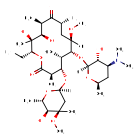
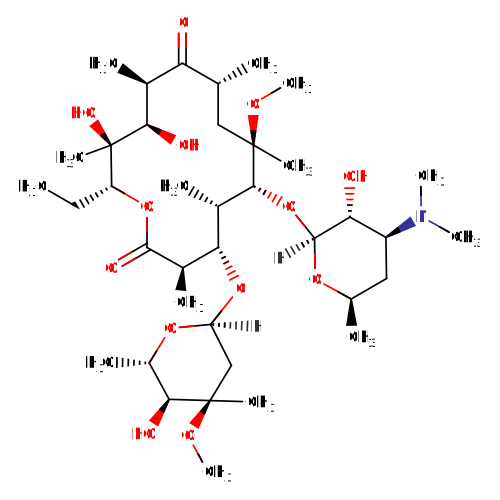
Structure for Clarithromycin (DB01211)
- Weight
- Average: 747.9534
Monoisotopic: 747.476891299 - Chemical Formula
- C38H69NO13
- Synonyms
- 6-O-methyl erythromycin
- 6-O-methylerythromycin
- 6-O-methylerythromycin A
- CLA
- Clarithromycin
- Clarithromycina
- Clarithromycine
- Clarithromycinum
- Claritromicina
- External IDs
- A-56268
- ABBOTT-56268
- TE-031

Pharmacology
- Indication
An alternative medication for the treatment of acute otitis media caused by H. influenzae, M. catarrhalis, or S. pneumoniae in patients with a history of type I penicillin hypersensitivity. Also for the treatment of pharyngitis and tonsillitis caused by susceptible Streptococcus pyogenes, as well as respiratory tract infections including acute maxillary sinusitis, acute bacterial exacerbations of chronic bronchitis, mild to moderate community-acquired pneuomia, Legionnaires' disease, and pertussis. Other indications include treatment of uncomplicated skin or skin structure infections, helicobacter pylori infection, duodenal ulcer disease, bartonella infections, early Lyme disease, and encephalitis caused by Toxoplasma gondii (in HIV infected patients in conjunction with pyrimethamine). Clarithromycin may also decrease the incidence of cryptosporidiosis, prevent the occurence of α-hemolytic (viridans group) streptococcal endocarditis, as well as serve as a primary prevention for Mycobacterium avium complex (MAC) bacteremia or disseminated infections (in adults, adolescents, and children with advanced HIV infection).
Clarithromycin is indicated in combination with vonoprazan and amoxicillin as co-packaged triple therapy to treat Helicobacter pylori (H. pylori) infection in adults.7
 Reduce drug development failure ratesBuild, train, & validate machine-learning modelswith evidence-based and structured datasets.Build, train, & validate predictive machine-learning models with structured datasets.
- Associated Conditions
Indication Type Indication Combined Product Details Approval Level Age Group Patient Characteristics Dose Form Treatment of Acute bacterial exacerbation of chronic bronchitis •••••••••••• ••••• Treatment of Acute maxillary sinusitis •••••••••••• •••••• •••••••• Treatment of Bacterial infection •••••••••••• Treatment of Bartonellosis ••• ••••• Treatment of Community acquired pneumonia •••••••••••• •••••• •••••••• - Contraindications & Blackbox Warnings
 Prevent Adverse Drug Events TodayTap into our Clinical API for life-saving information on contraindications & blackbox warnings, population restrictions, harmful risks, & more.Avoid life-threatening adverse drug events with our Clinical API
- Pharmacodynamics
Clarithromycin is a macrolide antibiotic whose spectrum of activity includes many gram-positive (Staphylococcus aureus, S. pneumoniae, and S. pyogenes) and gram-negative aerobic bacteria (Haemophilus influenzae, H. parainfluenzae, and Moraxella catarrhalis), many anaerobic bacteria, some mycobacteria, and some other organisms including Mycoplasma, Ureaplasma, Chlamydia, Toxoplasma, and Borrelia. Other aerobic bacteria that clarithromycin has activity against include C. pneumoniae and M. pneumoniae. Clarithromycin has an in-vitro activity that is similar or greater than that of erythromycin against erythromycin-susceptible organisms. Clarithromycin is usually bacteriostatic, but may be bactericidal depending on the organism and the drug concentration.
- Mechanism of action
Clarithromycin is first metabolized to 14-OH clarithromycin, which is active and works synergistically with its parent compound. Like other macrolides, it then penetrates bacteria cell wall and reversibly binds to domain V of the 23S ribosomal RNA of the 50S subunit of the bacterial ribosome, blocking translocation of aminoacyl transfer-RNA and polypeptide synthesis. Clarithromycin also inhibits the hepatic microsomal CYP3A4 isoenzyme and P-glycoprotein, an energy-dependent drug efflux pump.
Target Actions Organism A50S ribosomal protein L10 inhibitorShigella flexneri UPotassium voltage-gated channel subfamily H member 2 Not Available Humans USolute carrier organic anion transporter family member 1B1 Not Available Humans USolute carrier organic anion transporter family member 1B3 Not Available Humans - Absorption
Clarithromycin is well-absorbed, acid stable and may be taken with food.
- Volume of distribution
Not Available
- Protein binding
~ 70% protein bound
- Metabolism
Hepatic - predominantly metabolized by CYP3A4 resulting in numerous drug interactions.
Hover over products below to view reaction partners
- Route of elimination
After a 250 mg tablet every 12 hours, approximately 20% of the dose is excreted in the urine as clarithromycin, while after a 500 mg tablet every 12 hours, the urinary excretion of clarithromycin is somewhat greater, approximately 30%.
- Half-life
3-4 hours
- Clearance
Not Available
- Adverse Effects
 Improve decision support & research outcomesWith structured adverse effects data, including: blackbox warnings, adverse reactions, warning & precautions, & incidence rates. View sample adverse effects data in our new Data Library!Improve decision support & research outcomes with our structured adverse effects data.
- Toxicity
Symptoms of toxicity include diarrhea, nausea, abnormal taste, dyspepsia, and abdominal discomfort. Transient hearing loss with high doses has been observed. Pseudomembraneous colitis has been reported with clarithromycin use. Allergic reactions ranging from urticaria and mild skin eruptions to rare cases of anaphylaxis and Stevens-Johnson syndrome have also occurred. Rare cases of severe hepatic dysfunctions also have been reported. Hepatic failure is usually reversible, but fatalities have been reported. Clarithromycin may also cause tooth decolouration which may be removed by dental cleaning. Fetal abnormalities, such as cardiovascular defects, cleft palate and fetal growth retardation, have been observed in animals. Clarithromycin may cause QT prolongation.
- Pathways
Pathway Category Clarithromycin Action Pathway Drug action - Pharmacogenomic Effects/ADRs
- Not Available
Interactions
- Drug Interactions
- This information should not be interpreted without the help of a healthcare provider. If you believe you are experiencing an interaction, contact a healthcare provider immediately. The absence of an interaction does not necessarily mean no interactions exist.
Drug Interaction Integrate drug-drug
interactions in your software1,2-Benzodiazepine The metabolism of 1,2-Benzodiazepine can be decreased when combined with Clarithromycin. Abametapir The serum concentration of Clarithromycin can be increased when it is combined with Abametapir. Abatacept The metabolism of Clarithromycin can be increased when combined with Abatacept. Abemaciclib The metabolism of Abemaciclib can be decreased when combined with Clarithromycin. Abiraterone The metabolism of Abiraterone can be decreased when combined with Clarithromycin. - Food Interactions
- Take with food. Food increases absorption.
Products
 Drug product information from 10+ global regionsOur datasets provide approved product information including:dosage, form, labeller, route of administration, and marketing period.Access drug product information from over 10 global regions.
- Product Ingredients
Ingredient UNII CAS InChI Key Clarithromycin citrate 16K08R7NG0 848130-51-8 MDRWXDRMSKEMRE-AZFLODHXSA-N - Product Images
- International/Other Brands
- Klacid XL / Klaricid XL / Macladin / Naxy / Veclam / Zeclar
- Brand Name Prescription Products
Name Dosage Strength Route Labeller Marketing Start Marketing End Region Image Act Clarithromycin XL Tablet, extended release 500 mg Oral TEVA Canada Limited 2014-12-01 Not applicable Canada 
Biaxin Tablet, film coated 500 mg/1 Oral Cardinal Health 1991-10-31 2010-11-30 US 

Biaxin Tablet, film coated, extended release 500 mg/1 Oral Physicians Total Care, Inc. 2000-11-03 Not applicable US Biaxin Tablet, film coated 250 mg/1 Oral Remedy Repack 2012-07-16 2013-07-16 US Biaxin Granule, for suspension 250 mg/5mL Oral AbbVie Inc. 1993-12-23 2017-05-11 US - Generic Prescription Products
Name Dosage Strength Route Labeller Marketing Start Marketing End Region Image Apo-clarithromycin Tablet 500 mg Oral Apotex Corporation 2007-07-26 Not applicable Canada Apo-clarithromycin Tablet 250 mg Oral Apotex Corporation 2007-07-26 Not applicable Canada Apo-clarithromycin XL Tablet, extended release 500 mg Oral Apotex Corporation 2014-09-03 Not applicable Canada Ava-clarithromycin Tablet 250 mg Oral Avanstra Inc 2011-09-19 2014-08-21 Canada Ava-clarithromycin Tablet 500 mg Oral Avanstra Inc 2011-09-19 2014-08-21 Canada - Mixture Products
Name Ingredients Dosage Route Labeller Marketing Start Marketing End Region Image Aa-lansoprazole-amoxicillin-clarithromycin Clarithromycin (500 mg / tab) + Amoxicillin (500 mg / cap) + Lansoprazole (30 mg / cap) Capsule; Capsule, delayed release; Kit; Tablet Oral Aa Pharma Inc 2018-08-03 Not applicable Canada HELIPAK 500 + 30 + 1000mg TEDAVİ PAKETİ, 14 TABLET Clarithromycin (500 mg) + Amoxicillin (1 g) + Lansoprazole (370 mg) Tablet Oral TEVA İLAÇLARI SAN.VE TİC. A.Ş. 2002-08-02 Not applicable Turkey 
HELIPAK 500 + 30 + 1000mg TEDAVİ PAKETİ, 7 TABLET Clarithromycin (500 mg) + Amoxicillin (1 g) + Lansoprazole (370 mg) Tablet Oral TEVA İLAÇLARI SAN.VE TİC. A.Ş. 2020-08-14 Not applicable Turkey Hp-pac Clarithromycin (500 mg / tab) + Amoxicillin (500 mg / cap) + Lansoprazole (30 mg / cap) Capsule; Capsule, delayed release; Kit; Tablet Oral Takeda 1998-08-18 2021-03-08 Canada Lansoprazole, Amoxicillin and Clarithromycin Clarithromycin (500 mg/1) + Amoxicillin Trihydrate (500 mg/1) + Lansoprazole (30 mg/1) Kit Oral Prasco Laboratories 2015-03-03 2021-02-28 US - Unapproved/Other Products
Name Ingredients Dosage Route Labeller Marketing Start Marketing End Region Image Clarithromycin Clarithromycin (250 mg/1) Tablet Oral Remedy Repack 2009-08-06 2009-08-06 US KLAMER 500 MG FİLM KAPLI TABLET, 14 ADET Clarithromycin (500 mg) Tablet, film coated Oral ATABAY KİMYA SAN. VE TİC. A.Ş. 2013-01-29 Not applicable Turkey


Categories
- ATC Codes
- A02BD12 — Rabeprazole, amoxicillin and clarithromycin
- A02BD — Combinations for eradication of Helicobacter pylori
- A02B — DRUGS FOR PEPTIC ULCER AND GASTRO-OESOPHAGEAL REFLUX DISEASE (GORD)
- A02 — DRUGS FOR ACID RELATED DISORDERS
- A — ALIMENTARY TRACT AND METABOLISM
- A02BD — Combinations for eradication of Helicobacter pylori
- A02B — DRUGS FOR PEPTIC ULCER AND GASTRO-OESOPHAGEAL REFLUX DISEASE (GORD)
- A02 — DRUGS FOR ACID RELATED DISORDERS
- A — ALIMENTARY TRACT AND METABOLISM
- A02BD — Combinations for eradication of Helicobacter pylori
- A02B — DRUGS FOR PEPTIC ULCER AND GASTRO-OESOPHAGEAL REFLUX DISEASE (GORD)
- A02 — DRUGS FOR ACID RELATED DISORDERS
- A — ALIMENTARY TRACT AND METABOLISM
- A02BD — Combinations for eradication of Helicobacter pylori
- A02B — DRUGS FOR PEPTIC ULCER AND GASTRO-OESOPHAGEAL REFLUX DISEASE (GORD)
- A02 — DRUGS FOR ACID RELATED DISORDERS
- A — ALIMENTARY TRACT AND METABOLISM
- A02BD — Combinations for eradication of Helicobacter pylori
- A02B — DRUGS FOR PEPTIC ULCER AND GASTRO-OESOPHAGEAL REFLUX DISEASE (GORD)
- A02 — DRUGS FOR ACID RELATED DISORDERS
- A — ALIMENTARY TRACT AND METABOLISM
- A02BD — Combinations for eradication of Helicobacter pylori
- A02B — DRUGS FOR PEPTIC ULCER AND GASTRO-OESOPHAGEAL REFLUX DISEASE (GORD)
- A02 — DRUGS FOR ACID RELATED DISORDERS
- A — ALIMENTARY TRACT AND METABOLISM
- J01FA — Macrolides
- J01F — MACROLIDES, LINCOSAMIDES AND STREPTOGRAMINS
- J01 — ANTIBACTERIALS FOR SYSTEMIC USE
- J — ANTIINFECTIVES FOR SYSTEMIC USE
- A02BD — Combinations for eradication of Helicobacter pylori
- A02B — DRUGS FOR PEPTIC ULCER AND GASTRO-OESOPHAGEAL REFLUX DISEASE (GORD)
- A02 — DRUGS FOR ACID RELATED DISORDERS
- A — ALIMENTARY TRACT AND METABOLISM
- Drug Categories
- Alimentary Tract and Metabolism
- Anti-Bacterial Agents
- Anti-Infective Agents
- Antibacterials for Systemic Use
- Antiinfectives for Systemic Use
- BSEP/ABCB11 Substrates
- Cytochrome P-450 CYP3A Inhibitors
- Cytochrome P-450 CYP3A Substrates
- Cytochrome P-450 CYP3A4 Inhibitors
- Cytochrome P-450 CYP3A4 Inhibitors (strong)
- Cytochrome P-450 CYP3A4 Substrates
- Cytochrome P-450 CYP3A5 Inhibitors
- Cytochrome P-450 CYP3A5 Inhibitors (strong)
- Cytochrome P-450 CYP3A5 Substrates
- Cytochrome P-450 CYP3A7 Substrates
- Cytochrome P-450 Enzyme Inhibitors
- Cytochrome P-450 Substrates
- Drugs for Acid Related Disorders
- Drugs for Peptic Ulcer and Gastro-Oesophageal Reflux Disease (Gord)
- Enzyme Inhibitors
- Erythromycin and similars
- Lactones
- Macrolide Antimicrobial
- Macrolides
- Macrolides, Lincosamides and Streptogramins
- Moderate Risk QTc-Prolonging Agents
- OATP1B1/SLCO1B1 Inhibitors
- OATP1B3 inhibitors
- Other Macrolides
- P-glycoprotein inhibitors
- P-glycoprotein substrates
- Polyketides
- Protein Synthesis Inhibitors
- QTc Prolonging Agents
- Chemical TaxonomyProvided by Classyfire
- Description
- This compound belongs to the class of organic compounds known as aminoglycosides. These are molecules or a portion of a molecule composed of amino-modified sugars.
- Kingdom
- Organic compounds
- Super Class
- Organic oxygen compounds
- Class
- Organooxygen compounds
- Sub Class
- Carbohydrates and carbohydrate conjugates
- Direct Parent
- Aminoglycosides
- Alternative Parents
- Macrolides and analogues / O-glycosyl compounds / Oxanes / Monosaccharides / Tertiary alcohols / Trialkylamines / Secondary alcohols / 1,2-aminoalcohols / Amino acids and derivatives / Carboxylic acid esters show 9 more
- Substituents
- 1,2-aminoalcohol / Acetal / Alcohol / Aliphatic heteromonocyclic compound / Amine / Amino acid or derivatives / Aminoglycoside core / Carbonyl group / Carboxylic acid derivative / Carboxylic acid ester show 22 more
- Molecular Framework
- Aliphatic heteromonocyclic compounds
- External Descriptors
- macrolide antibiotic (CHEBI:3732) / Macrolides and lactone polyketides (C06912) / Macrolides and lactone polyketides (LMPK04000014)
- Affected organisms
- Enteric bacteria and other eubacteria
- Mycobacterium
- Streptococcus pyogenes
- Streptococcus pneumoniae
- Haemophilus influenzae
- Helicobacter pylori
- Mycobacterium leprae
- Mycobacterium avium
Chemical Identifiers
- UNII
- H1250JIK0A
- CAS number
- 81103-11-9
- InChI Key
- AGOYDEPGAOXOCK-KCBOHYOISA-N
- InChI
- InChI=1S/C38H69NO13/c1-15-26-38(10,45)31(42)21(4)28(40)19(2)17-37(9,47-14)33(52-35-29(41)25(39(11)12)16-20(3)48-35)22(5)30(23(6)34(44)50-26)51-27-18-36(8,46-13)32(43)24(7)49-27/h19-27,29-33,35,41-43,45H,15-18H2,1-14H3/t19-,20-,21+,22+,23-,24+,25+,26-,27+,29-,30+,31-,32+,33-,35+,36-,37-,38-/m1/s1
- IUPAC Name
- (3R,4S,5S,6R,7R,9R,11R,12R,13S,14R)-6-{[(2S,3R,4S,6R)-4-(dimethylamino)-3-hydroxy-6-methyloxan-2-yl]oxy}-14-ethyl-12,13-dihydroxy-4-{[(2R,4R,5S,6S)-5-hydroxy-4-methoxy-4,6-dimethyloxan-2-yl]oxy}-7-methoxy-3,5,7,9,11,13-hexamethyl-1-oxacyclotetradecane-2,10-dione
- SMILES
- [H][C@@]1(C[C@@](C)(OC)[C@@H](O)[C@H](C)O1)O[C@H]1[C@H](C)[C@@H](O[C@]2([H])O[C@H](C)C[C@@H]([C@H]2O)N(C)C)[C@@](C)(C[C@@H](C)C(=O)[C@H](C)[C@@H](O)[C@](C)(O)[C@@H](CC)OC(=O)[C@@H]1C)OC
References
- Synthesis Reference
Jih-Hua Liu, David A. Riley, "Preparation of crystal form II of clarithromycin." U.S. Patent US5844105, issued May, 1997.
US5844105- General References
- Malhotra-Kumar S, Lammens C, Coenen S, Van Herck K, Goossens H: Effect of azithromycin and clarithromycin therapy on pharyngeal carriage of macrolide-resistant streptococci in healthy volunteers: a randomised, double-blind, placebo-controlled study. Lancet. 2007 Feb 10;369(9560):482-90. [Article]
- Zuckerman JM, Qamar F, Bono BR: Macrolides, ketolides, and glycylcyclines: azithromycin, clarithromycin, telithromycin, tigecycline. Infect Dis Clin North Am. 2009 Dec;23(4):997-1026, ix-x. doi: 10.1016/j.idc.2009.06.013. [Article]
- Piscitelli SC, Danziger LH, Rodvold KA: Clarithromycin and azithromycin: new macrolide antibiotics. Clin Pharm. 1992 Feb;11(2):137-52. [Article]
- Peters DH, Clissold SP: Clarithromycin. A review of its antimicrobial activity, pharmacokinetic properties and therapeutic potential. Drugs. 1992 Jul;44(1):117-64. [Article]
- Authors unspecified: Clarithromycin. Tuberculosis (Edinb). 2008 Mar;88(2):92-5. doi: 10.1016/S1472-9792(08)70005-2. [Article]
- Stephenson GA, Stowell JG, Toma PH, Pfeiffer RR, Byrn SR: Solid-state investigations of erythromycin A dihydrate: structure, NMR spectroscopy, and hygroscopicity. J Pharm Sci. 1997 Nov;86(11):1239-44. [Article]
- FDA Approved Drug Products: VOQUEZNA TRIPLE PAK (vonoprazan tablets; amoxicillin capsules; clarithromycin tablets), co-packaged for oral use and VOQUEZNA DUAL PAK (vonoprazan tablets; amoxicillin capsules) co-packaged for oral use [Link]
- External Links
- Human Metabolome Database
- HMDB0015342
- KEGG Drug
- D00276
- KEGG Compound
- C06912
- PubChem Compound
- 84029
- PubChem Substance
- 46506489
- ChemSpider
- 10342604
- BindingDB
- 50404044
- 21212
- ChEBI
- 3732
- ChEMBL
- CHEMBL1741
- ZINC
- ZINC000085534098
- Therapeutic Targets Database
- DAP000410
- PharmGKB
- PA449028
- PDBe Ligand
- CTY
- RxList
- RxList Drug Page
- Drugs.com
- Drugs.com Drug Page
- Wikipedia
- Clarithromycin
- PDB Entries
- 1j5a / 5igj / 5igw / 6u18 / 7f0d
- FDA label
- Download (376 KB)
Clinical Trials
- Clinical Trials
Phase Status Purpose Conditions Count 4 Completed Health Services Research Healthy Volunteers (HV) 1 4 Completed Prevention Helicobacter Pylori Infection / Obesity, Morbid 1 4 Completed Prevention Lung Disorder 1 4 Completed Supportive Care Periodontitis 1 4 Completed Treatment Asthma 1
Pharmacoeconomics
- Manufacturers
- Not Available
- Packagers
- Abbott Laboratories Ltd.
- Advanced Pharmaceutical Services Inc.
- Amerisource Health Services Corp.
- Apotex Inc.
- AQ Pharmaceuticals Inc.
- A-S Medication Solutions LLC
- Bryant Ranch Prepack
- Cardinal Health
- DAVA Pharmaceuticals
- Direct Dispensing Inc.
- Dispensing Solutions
- Diversified Healthcare Services Inc.
- Dorx LLC
- Eon Labs
- Gallipot
- Genpharm LP
- H.J. Harkins Co. Inc.
- Innoviant Pharmacy Inc.
- Ivax Pharmaceuticals
- Kaiser Foundation Hospital
- Lake Erie Medical and Surgical Supply
- Medvantx Inc.
- Murfreesboro Pharmaceutical Nursing Supply
- Mylan
- Neuman Distributors Inc.
- Nucare Pharmaceuticals Inc.
- Palmetto Pharmaceuticals Inc.
- PCA LLC
- PD-Rx Pharmaceuticals Inc.
- Pharmaceutical Utilization Management Program VA Inc.
- Physicians Total Care Inc.
- Preferred Pharmaceuticals Inc.
- Prepackage Specialists
- Promex Medical Inc.
- Ranbaxy Laboratories
- Rebel Distributors Corp.
- Redpharm Drug
- Remedy Repack
- Resource Optimization and Innovation LLC
- Roxane Labs
- Sandhills Packaging Inc.
- Sandoz
- Southwood Pharmaceuticals
- St Mary's Medical Park Pharmacy
- Stat Rx Usa
- Stat Scripts LLC
- Teva Pharmaceutical Industries Ltd.
- Toba Pharma Inc.
- UDL Laboratories
- Watson Pharmaceuticals
- Wockhardt Ltd.
- Zhejiang Huayi Pharmaceutical Co. Ltd.
- Dosage Forms
Form Route Strength Syrup Tablet, extended release Oral 500 mg Suspension Oral Tablet, coated Oral Granule, for suspension Oral 125 mg/5mL Granule, for suspension Oral 250 mg/5mL Tablet, film coated Oral 250 mg/1 Tablet, film coated Oral 500 mg/1 Tablet, film coated, extended release Oral 500 mg/1 Powder, for suspension Oral 5 g Tablet, film coated, extended release Oral 500 mg Tablet Oral 500 mg For suspension Oral 125 mg/5mL For suspension Oral 250 mg/5mL Granule, for suspension Oral 125 mg / 5 mL Granule, for suspension Oral 250 mg / 5 mL Tablet Oral 250 mg/1 Tablet Oral 500 mg/1 Tablet, coated Oral 250 mg/1 Tablet, coated Oral 500 mg/1 Tablet, film coated Oral Granule Oral 125 MG/5ML Granule Oral 5 ML Tablet, film coated, extended release Oral 1000 mg/1 Tablet, extended release Oral 500 mg/1 Granule Oral 125 MG Granule Oral 250 MG Injection, powder, for solution Parenteral Tablet, extended release Oral Granule, for suspension Oral Powder, for solution Oral 5 g Powder, for solution Oral 40 g Powder Intravenous 500 mg Granule Oral 500000 g Powder, for solution Powder, for solution Oral 12.64 g Powder, for solution Parenteral 500 MG Tablet Oral Granule, for suspension Oral 25 MG/ML Granule, for suspension Oral 50 MG/ML Powder, for suspension Oral 2.5 g Powder 500 MG Injection, solution Intravenous Powder, for suspension Oral 125 mg Suspension Oral 5.0000 g Tablet Oral 250 mg Capsule; kit; tablet Oral Tablet, film coated, extended release Oral Suspension Oral 125 mg/5ml Suspension Oral 250 mg Injection, solution Intravenous 500 mg Tablet Oral 250.000 mg Injection, powder, lyophilized, for solution Parenteral 500 mg Tablet Oral Injection Granule, for suspension Oral 500 MG Powder Parenteral 500 MG/10ML Powder, for suspension Oral 125 mg/5ml Tablet, delayed release Oral 500 mg Granule Oral 250 MG/5ML Granule Oral Kit; tablet Oral Injection Intravenous 500 mg Tablet, delayed release Oral Suspension Oral 125 mg Tablet, film coated Oral 500.000 mg Granule Oral 5 g Solution Intravenous 500.000 mg Injection, powder, lyophilized, for solution Intravenous 500 mg Tablet Oral 50000000 mg Suspension Oral 2500.000 mg Suspension Oral 250 mg/5ml Tablet Oral 250.00 mg Powder Oral 2.5 g Capsule; capsule, delayed release; kit; tablet Oral Tablet Oral 125 mg Powder, for solution Intravenous 500 MG/10ML Powder, for solution Oral 125 mg Granule Oral 2500 mg Powder, for suspension Oral 250 mg/5ml Injection, powder, for solution Intravenous 500 mg Solution Intravenous 500 mg Capsule, delayed release Oral 200 mg Injection, powder, lyophilized, for solution Intravenous Kit Oral Powder, for suspension Oral 125 mg / 5 mL Powder, for suspension Oral 250 mg / 5 mL Suspension Oral Powder, for suspension Oral 5000 mg Granule, for suspension Oral 250 MG Capsule; tablet Oral Powder 500 mg/10ml Tablet Oral 500.000 mg Capsule Oral 500.00 mg Tablet, film coated Oral 500 mg Tablet, coated Oral 250 mg Tablet, coated Oral 500 mg Injection, powder, for solution 500 mg Tablet, film coated Oral 250 mg - Prices
Unit description Cost Unit Biaxin 60 250 mg tablet Bottle 379.5USD bottle Clarithromycin 250 mg/5ml Suspension 100ml Bottle 86.23USD bottle Clarithromycin 250 mg/5ml Suspension 50ml Bottle 46.56USD bottle Clarithromycin 125 mg/5ml Suspension 100ml Bottle 45.24USD bottle Clarithromycin 125 mg/5ml Suspension 50ml Bottle 27.99USD bottle Biaxin XL 500 mg 24 Hour tablet 6.77USD tablet Biaxin xl 500 mg tablet 6.57USD tablet Biaxin 250 mg tablet 6.42USD tablet Biaxin 500 mg tablet 6.37USD tablet Clarithromycin 500 mg 24 Hour tablet 5.21USD tablet Clarithromycin er 500 mg tablet 5.01USD tablet Clarithromycin 250 mg tablet 4.61USD tablet Clarithromycin 500 mg tablet 4.61USD tablet Biaxin Bid 500 mg Tablet 3.41USD tablet Biaxin Xl 500 mg Extended-Release Tablet 2.63USD tablet Mylan-Clarithromycin 500 mg Tablet 1.91USD tablet Pms-Clarithromycin 500 mg Tablet 1.91USD tablet Ratio-Clarithromycin 500 mg Tablet 1.91USD tablet Sandoz Clarithromycin 500 mg Tablet 1.91USD tablet Biaxin Bid 250 mg Tablet 1.73USD tablet Clarithromycin 100% powder 1.56USD g Biaxin 50 mg/ml Suspension 0.59USD ml Biaxin 25 mg/ml Suspension 0.3USD ml DrugBank does not sell nor buy drugs. Pricing information is supplied for informational purposes only.- Patents
Patent Number Pediatric Extension Approved Expires (estimated) Region CA2471102 No 2005-02-08 2017-07-25 Canada CA1328609 No 1994-04-19 2011-04-19 Canada US6010718 No 2000-01-04 2017-04-11 US US6551616 No 2003-04-22 2017-06-15 US US9186411 No 2015-11-17 2030-08-11 US US7977488 No 2011-07-12 2028-08-11 US
Properties
- State
- Solid
- Experimental Properties
Property Value Source melting point (°C) 220 dec °C PhysProp water solubility 0.33 mg/L Not Available logP 3.16 MCFARLAND,JW ET AL. (1997) pKa 8.99 (at 25 °C) MCFARLAND,JW ET AL. (1997) - Predicted Properties
Property Value Source Water Solubility 0.217 mg/mL ALOGPS logP 3.18 ALOGPS logP 3.24 Chemaxon logS -3.5 ALOGPS pKa (Strongest Acidic) 12.46 Chemaxon pKa (Strongest Basic) 9 Chemaxon Physiological Charge 1 Chemaxon Hydrogen Acceptor Count 13 Chemaxon Hydrogen Donor Count 4 Chemaxon Polar Surface Area 182.91 Å2 Chemaxon Rotatable Bond Count 8 Chemaxon Refractivity 190.79 m3·mol-1 Chemaxon Polarizability 82.03 Å3 Chemaxon Number of Rings 3 Chemaxon Bioavailability 0 Chemaxon Rule of Five No Chemaxon Ghose Filter No Chemaxon Veber's Rule No Chemaxon MDDR-like Rule Yes Chemaxon - Predicted ADMET Features
Property Value Probability Human Intestinal Absorption - 0.5434 Blood Brain Barrier - 0.987 Caco-2 permeable - 0.8674 P-glycoprotein substrate Substrate 0.7714 P-glycoprotein inhibitor I Inhibitor 0.8475 P-glycoprotein inhibitor II Non-inhibitor 0.622 Renal organic cation transporter Non-inhibitor 0.8987 CYP450 2C9 substrate Non-substrate 0.7898 CYP450 2D6 substrate Non-substrate 0.9161 CYP450 3A4 substrate Substrate 0.6672 CYP450 1A2 substrate Non-inhibitor 0.8973 CYP450 2C9 inhibitor Non-inhibitor 0.8851 CYP450 2D6 inhibitor Non-inhibitor 0.9258 CYP450 2C19 inhibitor Non-inhibitor 0.8835 CYP450 3A4 inhibitor Non-inhibitor 0.5524 CYP450 inhibitory promiscuity Low CYP Inhibitory Promiscuity 0.898 Ames test Non AMES toxic 0.8967 Carcinogenicity Non-carcinogens 0.9294 Biodegradation Not ready biodegradable 1.0 Rat acute toxicity 2.7236 LD50, mol/kg Not applicable hERG inhibition (predictor I) Weak inhibitor 0.9883 hERG inhibition (predictor II) Non-inhibitor 0.9038
Spectra
- Mass Spec (NIST)
- Not Available
- Spectra
- Chromatographic Properties
Collision Cross Sections (CCS)
Adduct CCS Value (Å2) Source type Source [M-H]- 277.8625628 predictedDarkChem Lite v0.1.0 [M-H]- 275.8160628 predictedDarkChem Lite v0.1.0 [M-H]- 259.12027 predictedDeepCCS 1.0 (2019) [M+H]+ 276.2549628 predictedDarkChem Lite v0.1.0 [M+H]+ 275.1409628 predictedDarkChem Lite v0.1.0 [M+H]+ 260.844 predictedDeepCCS 1.0 (2019) [M+Na]+ 276.5077628 predictedDarkChem Lite v0.1.0 [M+Na]+ 275.7234628 predictedDarkChem Lite v0.1.0 [M+Na]+ 267.0952 predictedDeepCCS 1.0 (2019)
Targets

- Kind
- Protein
- Organism
- Shigella flexneri
- Pharmacological action
- Yes
- Actions
- Inhibitor
- General Function
- Structural constituent of ribosome
- Specific Function
- Protein L10 is also a translational repressor protein. It controls the translation of the rplJL-rpoBC operon by binding to its mRNA (By similarity).Forms part of the ribosomal stalk, playing a cent...
- Gene Name
- rplJ
- Uniprot ID
- P0A7J6
- Uniprot Name
- 50S ribosomal protein L10
- Molecular Weight
- 17711.38 Da
References
- Morimura T, Hashiba M, Kameda H, Takami M, Takahama H, Ohshige M, Sugawara F: Identification of macrolide antibiotic-binding Human_p8 protein. J Antibiot (Tokyo). 2008 May;61(5):291-6. doi: 10.1038/ja.2008.41. [Article]
- Champney WS, Burdine R: Macrolide antibiotic inhibition of translation and 50S ribosomal subunit assembly in methicillin-resistant Staphylococcus aureus cells. Microb Drug Resist. 1998 Fall;4(3):169-74. [Article]
- Zuckerman JM, Qamar F, Bono BR: Macrolides, ketolides, and glycylcyclines: azithromycin, clarithromycin, telithromycin, tigecycline. Infect Dis Clin North Am. 2009 Dec;23(4):997-1026, ix-x. doi: 10.1016/j.idc.2009.06.013. [Article]
- Authors unspecified: Clarithromycin. Tuberculosis (Edinb). 2008 Mar;88(2):92-5. doi: 10.1016/S1472-9792(08)70005-2. [Article]
- Champney WS, Burdine R: Macrolide antibiotics inhibit 50S ribosomal subunit assembly in Bacillus subtilis and Staphylococcus aureus. Antimicrob Agents Chemother. 1995 Sep;39(9):2141-4. [Article]
- Kind
- Protein
- Organism
- Humans
- Pharmacological action
- Unknown
- General Function
- Voltage-gated potassium channel activity involved in ventricular cardiac muscle cell action potential repolarization
- Specific Function
- Pore-forming (alpha) subunit of voltage-gated inwardly rectifying potassium channel. Channel properties are modulated by cAMP and subunit assembly. Mediates the rapidly activating component of the ...
- Gene Name
- KCNH2
- Uniprot ID
- Q12809
- Uniprot Name
- Potassium voltage-gated channel subfamily H member 2
- Molecular Weight
- 126653.52 Da
References
- Keseru GM: Prediction of hERG potassium channel affinity by traditional and hologram qSAR methods. Bioorg Med Chem Lett. 2003 Aug 18;13(16):2773-5. [Article]
- Kind
- Protein
- Organism
- Humans
- Pharmacological action
- Unknown
- General Function
- Sodium-independent organic anion transmembrane transporter activity
- Specific Function
- Mediates the Na(+)-independent uptake of organic anions such as pravastatin, taurocholate, methotrexate, dehydroepiandrosterone sulfate, 17-beta-glucuronosyl estradiol, estrone sulfate, prostagland...
- Gene Name
- SLCO1B1
- Uniprot ID
- Q9Y6L6
- Uniprot Name
- Solute carrier organic anion transporter family member 1B1
- Molecular Weight
- 76447.99 Da
References
- De Bruyn T, van Westen GJ, Ijzerman AP, Stieger B, de Witte P, Augustijns PF, Annaert PP: Structure-based identification of OATP1B1/3 inhibitors. Mol Pharmacol. 2013 Jun;83(6):1257-67. doi: 10.1124/mol.112.084152. Epub 2013 Apr 9. [Article]
- Kind
- Protein
- Organism
- Humans
- Pharmacological action
- Unknown
- General Function
- Sodium-independent organic anion transmembrane transporter activity
- Specific Function
- Mediates the Na(+)-independent uptake of organic anions such as 17-beta-glucuronosyl estradiol, taurocholate, triiodothyronine (T3), leukotriene C4, dehydroepiandrosterone sulfate (DHEAS), methotre...
- Gene Name
- SLCO1B3
- Uniprot ID
- Q9NPD5
- Uniprot Name
- Solute carrier organic anion transporter family member 1B3
- Molecular Weight
- 77402.175 Da
References
- De Bruyn T, van Westen GJ, Ijzerman AP, Stieger B, de Witte P, Augustijns PF, Annaert PP: Structure-based identification of OATP1B1/3 inhibitors. Mol Pharmacol. 2013 Jun;83(6):1257-67. doi: 10.1124/mol.112.084152. Epub 2013 Apr 9. [Article]
Enzymes
- Kind
- Protein
- Organism
- Humans
- Pharmacological action
- Unknown
- Actions
- SubstrateInhibitor
- General Function
- Vitamin d3 25-hydroxylase activity
- Specific Function
- Cytochromes P450 are a group of heme-thiolate monooxygenases. In liver microsomes, this enzyme is involved in an NADPH-dependent electron transport pathway. It performs a variety of oxidation react...
- Gene Name
- CYP3A4
- Uniprot ID
- P08684
- Uniprot Name
- Cytochrome P450 3A4
- Molecular Weight
- 57342.67 Da
References
- Zuckerman JM, Qamar F, Bono BR: Macrolides, ketolides, and glycylcyclines: azithromycin, clarithromycin, telithromycin, tigecycline. Infect Dis Clin North Am. 2009 Dec;23(4):997-1026, ix-x. doi: 10.1016/j.idc.2009.06.013. [Article]
- Niemi M, Neuvonen PJ, Kivisto KT: The cytochrome P4503A4 inhibitor clarithromycin increases the plasma concentrations and effects of repaglinide. Clin Pharmacol Ther. 2001 Jul;70(1):58-65. doi: 10.1067/mcp.2001.116511. [Article]
- Dalboge CS, Nielsen XC, Dalhoff K, Alffenaar JW, Duno M, Buchard A, Uges DR, Jensen AG, Jurgens G, Pressler T, Johansen HK, Hoiby N: Pharmacokinetic variability of clarithromycin and differences in CYP3A4 activity in patients with cystic fibrosis. J Cyst Fibros. 2014 Mar;13(2):179-85. doi: 10.1016/j.jcf.2013.08.008. Epub 2013 Sep 10. [Article]
- Akiyoshi T, Ito M, Murase S, Miyazaki M, Guengerich FP, Nakamura K, Yamamoto K, Ohtani H: Mechanism-based inhibition profiles of erythromycin and clarithromycin with cytochrome P450 3A4 genetic variants. Drug Metab Pharmacokinet. 2013;28(5):411-5. Epub 2013 Mar 19. [Article]
- Zhou S, Yung Chan S, Cher Goh B, Chan E, Duan W, Huang M, McLeod HL: Mechanism-based inhibition of cytochrome P450 3A4 by therapeutic drugs. Clin Pharmacokinet. 2005;44(3):279-304. doi: 10.2165/00003088-200544030-00005. [Article]
- Flockhart Table of Drug Interactions [Link]
- BIAXIN (clarithromycin) - Drug Monograph [Link]
- Kind
- Protein
- Organism
- Humans
- Pharmacological action
- Unknown
- Actions
- SubstrateInhibitor
- General Function
- Oxygen binding
- Specific Function
- Cytochromes P450 are a group of heme-thiolate monooxygenases. In liver microsomes, this enzyme is involved in an NADPH-dependent electron transport pathway. It oxidizes a variety of structurally un...
- Gene Name
- CYP3A5
- Uniprot ID
- P20815
- Uniprot Name
- Cytochrome P450 3A5
- Molecular Weight
- 57108.065 Da
References
- Flockhart Table of Drug Interactions [Link]
Transporters
- Kind
- Protein
- Organism
- Humans
- Pharmacological action
- Unknown
- Actions
- Inhibitor
- General Function
- Sodium-independent organic anion transmembrane transporter activity
- Specific Function
- Mediates sodium-independent multispecific organic anion transport. Transport of prostaglandin E2, prostaglandin F2, tetracycline, bumetanide, estrone sulfate, glutarate, dehydroepiandrosterone sulf...
- Gene Name
- SLC22A7
- Uniprot ID
- Q9Y694
- Uniprot Name
- Solute carrier family 22 member 7
- Molecular Weight
- 60025.025 Da
References
- Kobayashi Y, Sakai R, Ohshiro N, Ohbayashi M, Kohyama N, Yamamoto T: Possible involvement of organic anion transporter 2 on the interaction of theophylline with erythromycin in the human liver. Drug Metab Dispos. 2005 May;33(5):619-22. Epub 2005 Feb 11. [Article]
- Kind
- Protein
- Organism
- Humans
- Pharmacological action
- Unknown
- Actions
- SubstrateInhibitor
- General Function
- Xenobiotic-transporting atpase activity
- Specific Function
- Energy-dependent efflux pump responsible for decreased drug accumulation in multidrug-resistant cells.
- Gene Name
- ABCB1
- Uniprot ID
- P08183
- Uniprot Name
- Multidrug resistance protein 1
- Molecular Weight
- 141477.255 Da
References
- Polli JW, Wring SA, Humphreys JE, Huang L, Morgan JB, Webster LO, Serabjit-Singh CS: Rational use of in vitro P-glycoprotein assays in drug discovery. J Pharmacol Exp Ther. 2001 Nov;299(2):620-8. [Article]
- Wang EJ, Casciano CN, Clement RP, Johnson WW: Active transport of fluorescent P-glycoprotein substrates: evaluation as markers and interaction with inhibitors. Biochem Biophys Res Commun. 2001 Nov 30;289(2):580-5. [Article]
- Egashira K, Ohtani H, Itoh S, Koyabu N, Tsujimoto M, Murakami H, Sawada Y: Inhibitory effects of pomelo on the metabolism of tacrolimus and the activities of CYP3A4 and P-glycoprotein. Drug Metab Dispos. 2004 Aug;32(8):828-33. [Article]
- Authors unspecified: Clarithromycin. Tuberculosis (Edinb). 2008 Mar;88(2):92-5. doi: 10.1016/S1472-9792(08)70005-2. [Article]
- Dey S, Gunda S, Mitra AK: Pharmacokinetics of erythromycin in rabbit corneas after single-dose infusion: role of P-glycoprotein as a barrier to in vivo ocular drug absorption. J Pharmacol Exp Ther. 2004 Oct;311(1):246-55. Epub 2004 Jun 2. [Article]
- FDA Drug Development and Drug Interactions: Table of Substrates, Inhibitors and Inducers [Link]
- Kind
- Protein
- Organism
- Humans
- Pharmacological action
- No
- Actions
- Substrate
- General Function
- Transporter activity
- Specific Function
- Involved in the ATP-dependent secretion of bile salts into the canaliculus of hepatocytes.
- Gene Name
- ABCB11
- Uniprot ID
- O95342
- Uniprot Name
- Bile salt export pump
- Molecular Weight
- 146405.83 Da
References
- Pedersen JM, Matsson P, Bergstrom CA, Hoogstraate J, Noren A, LeCluyse EL, Artursson P: Early identification of clinically relevant drug interactions with the human bile salt export pump (BSEP/ABCB11). Toxicol Sci. 2013 Dec;136(2):328-43. doi: 10.1093/toxsci/kft197. Epub 2013 Sep 6. [Article]
- Kind
- Protein
- Organism
- Humans
- Pharmacological action
- Unknown
- Actions
- Inhibitor
- General Function
- Sodium-independent organic anion transmembrane transporter activity
- Specific Function
- Mediates the Na(+)-independent uptake of organic anions such as pravastatin, taurocholate, methotrexate, dehydroepiandrosterone sulfate, 17-beta-glucuronosyl estradiol, estrone sulfate, prostagland...
- Gene Name
- SLCO1B1
- Uniprot ID
- Q9Y6L6
- Uniprot Name
- Solute carrier organic anion transporter family member 1B1
- Molecular Weight
- 76447.99 Da
References
- FDA Drug Development and Drug Interactions: Table of Substrates, Inhibitors and Inducers [Link]
- Kind
- Protein
- Organism
- Humans
- Pharmacological action
- Unknown
- Actions
- Inhibitor
- General Function
- Sodium-independent organic anion transmembrane transporter activity
- Specific Function
- Mediates the Na(+)-independent uptake of organic anions such as 17-beta-glucuronosyl estradiol, taurocholate, triiodothyronine (T3), leukotriene C4, dehydroepiandrosterone sulfate (DHEAS), methotre...
- Gene Name
- SLCO1B3
- Uniprot ID
- Q9NPD5
- Uniprot Name
- Solute carrier organic anion transporter family member 1B3
- Molecular Weight
- 77402.175 Da
References
- FDA Drug Development and Drug Interactions: Table of Substrates, Inhibitors and Inducers [Link]

Drug created at June 13, 2005 13:24 / Updated at April 24, 2024 14:30